Liyann Messaging
Artisans & support
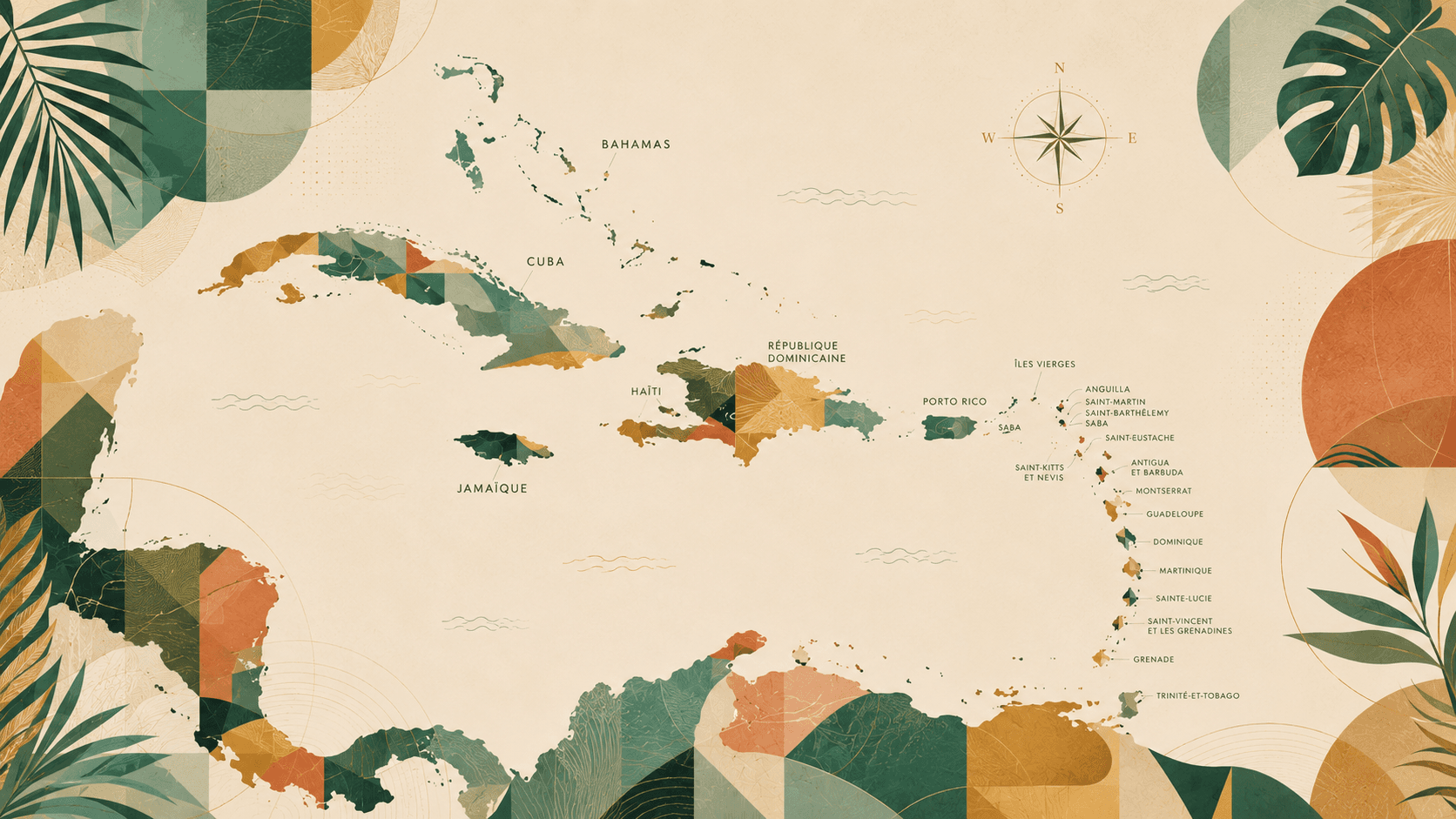
Caribbean Marketplace
Martinique, Guadeloupe, French Guiana — three territories, one craft
3
Regions
88
Communes
200+
Artisans
Our vision
Martinique, Guadeloupe, French Guiana — three territories with exceptional craftsmanship, too long confined to their island borders. Liyann was born from the conviction that these artisanal riches deserve to be known, recognized, and shared well beyond the Caribbean shores.
Today
A Martiniquais artisan sold in Guadeloupe. A Guyanese designer discovered in Martinique. Liyann bridges the distances between sister islands and creates a unified Caribbean market where none existed before.
3 territories · 1 platform
In progress
Millions of mainland French people are still unfamiliar with Caribbean craftsmanship. Liyann opens the door: direct delivery, storytelling rooted in local traditions, and creators finally visible to the level of their talent.
Metropolitan France · DOM-TOM
Tomorrow
Caribbean craftsmanship has its place in North American, European, and beyond markets. Our ambition: to make the Caribbean a global reference for authentic handmade goods, and position each artisan as an ambassador of their culture.
Europe · Americas · and beyond
“ Every creation purchased on Liyann is a bridge between an island and the world. ”
30,000+
Craft businesses
Martinique and Guadeloupe combined
1996
First AOC outside mainland France
Martinique agricultural rum
200 BC
Origins of Arawak pottery
Guadeloupe, Morel site, Le Moule
2020
Tembé listed in French ICH
4th Guianese element recognised
The Territories
Martinique, Guadeloupe, French Guiana — each territory carries within it a culture, traditions, and craftsmanship shaped by centuries of blended history.
Martinique
Emblematic crafts
Madras arrived from the shores of Pondicherry in the 18th century. Its checks carry a secret alphabet: tied on one side, the headscarf says 'I am free'; tied on both sides, 'I am taken'; tied at all four corners, 'my heart is spoken for, but it can still speak'.
The choux necklace, the collier de chien, the zanno earrings — every piece has a name, a story, a way of being worn. Forged during slavery as status markers, Creole jewellery became acts of resistance, then emblems of Caribbean identity, worn with an unmistakable pride.
Tembé was born in the maroon camps of French Guiana, where the Bushinenge — enslaved people who fled Dutch plantations — rebuilt a secret Africa in the equatorial forest. Each red, white and black geometric interlace is a page of history carved into living wood.
Kalinago baskets woven from aroman or cachibou — fibres that redden as they age — are recognisable by their perfect spiral. Guadeloupe's basket weaving, sold at the market in Sainte-Anne, follows gestures unchanged since the archipelago's first inhabitants.
The Village de la Poterie in Trois-Îlets, Martinique, is one of the rare workshops still using a blue-grey volcanic clay extracted from the hillside. A handful of women artisans keep alive the Arawak coiling technique — strip by strip, never on the wheel.
Martinique's agricultural rum is not rum like any other. Where industrial rum starts from molasses, this starts from vesou — the pure juice of cane cut that very morning. Its AOC (1996, the first outside mainland France) protects a specific terroir: volcanic soil, Atlantic humidity, trade-wind air.
A melting pot of five civilisations
Nowhere else does craft carry the memory of such an intense encounter between five great human traditions.
01
The Kalinago — whose name was distorted to 'Caribs' by colonisers — never disappeared. Their language gave hundreds of words to Antillean Creole: hammock, caiman, manioc, canoe. Their mastery of weaving and plant dyes still flows through contemporary basketry.
02
The slave trade did not erase memory. The Bushinenge of French Guiana — Aluku, Ndjuka, Saramaka — preserved an almost intact African culture in the forest for three centuries: language, rites, hand-sewn fabrics, and a tembé that encodes each family's history in its interlace.
03
Colonisers brought cabinetry, bobbin lace, Richelieu embroidery. But Caribbean wood — mahogany, logwood, bois-d'inde — transformed these techniques: Antillean furniture invented taller, more open forms to let air circulate in the tropics.
04
Arriving between 1853 and 1885 as indentured workers, Indians anchored their rites, colours and spices in Martinique and Guadeloupe. Safran péyi (turmeric), madras, Divali and the fire-walking ceremony Timi crossed the ocean and became Creole.
05
Creolisation is not a mixture — it is an invention. Martinican thinker Édouard Glissant called it the 'Tout-Monde': the Caribbean's capacity to take, transform, and return something entirely new. Today's artisans are its living heirs.
Know-how
Each Caribbean territory has its own artisanal traditions, inherited from the indigenous, African, and European peoples who shaped these islands.
Bamboo, latania, reeds, precious wood — Caribbean nature inspires every creation.
Techniques are passed down from generation to generation, preserving a unique ancestral knowledge.
Each piece reflects the identity of its territory: colors, shapes, symbols.
On Liyann, every purchase directly compensates the artisan who created the piece.
Throughout the Caribbean
From the hills of Martinique to the shores of Guadeloupe, through the forests of French Guiana, our artisans perpetuate a unique expertise.